
Chatham County Parole, Probation, and PRS
The North Carolina Department of Adult Correction Division of Community Supervision oversees three distinct forms of supervision that can affect a Chatham County record. Probation comes from a court judgment and may be imposed instead of an active prison term. Parole is discretionary release before sentence expiration for the limited group that remains eligible under North Carolina law. Post-release supervision, often shortened to PRS, follows prison confinement under structured sentencing.
| Supervision type | How it begins | What the public record may show |
|---|---|---|
| Probation | A judge orders community supervision, often without an active prison term. | An active probationer/parolee result, supervision period, county or office, and sentence details. |
| Parole | The Parole Commission grants conditional release to a person who is legally eligible. | Parole status, prison release information, supervision period, and a public office field. |
| Post-release supervision | Prison confinement ends and the mandatory supervision portion begins. | POST RELEASE/PAROLE with an ACTIVE status, plus sentence and office information. |
A person can therefore be released from prison and still be an active NCDAC supervisee. Read the top-level inmate and supervision labels together. A live Chatham County Detention Center roster entry points to present local custody; its absence does not establish release, much less the end of state supervision.
Verify Chatham County Post-Release Supervision
The official starting point is the NCDAC Offender Public Information Search. It covers current and historical state prisoners, probationers, parolees, and post-release supervisees. It does not cover a jail-only Chatham County stay. Use an offender number when it is known because a name alone can match more than one person.
- Choose All or Active Probationer/Parolee in the offender-status field. An active-inmate-only search can omit someone already released to supervision.
- Search by offender number, or enter the full name and compare birth information, conviction county, docket, and sentence facts.
- Open the matching record and read Inmate Status with Probation/Parole/Post Release Status. Do not treat one field in isolation.
- Review each incarceration and supervision period, including Actual Release Date, service status, offense, and sentence number.
- Note the public Probation/Parole Office field. If it is unclear, use Community Supervision to route the inquiry.
- Compare the NCDAC entry with the Chatham judgment when the key question is whether the court ordered probation or prison followed by PRS.
The North Carolina eCourts Portal can locate a Chatham case by name, case number, or citation. It is an informational view, not the official court record. An official judgment from the Chatham Clerk of Superior Court is the stronger source for the sentence imposed. The site’s Chatham County released-inmate search guide explains how the local jail, court, and state systems divide responsibility.
Note: A common-name match is not enough; compare the offender number, dates, case, sentence, and supervision fields before drawing a conclusion.
Chatham County Supervision Record Fields
NCDAC presents top-level status and sentence-level history as a hierarchy. That matters when a Chatham County person has more than one sentence or supervision period. A completed sentence block can say expired while a later block remains active. Likewise, an Actual Release Date records the end of prison confinement for one period, not necessarily the end of all state control.
| Inmate Status | Shows the person’s current relationship to prison custody, including a post-release or parole label. |
|---|---|
| Probation/Parole/Post Release Status | Shows whether the community-supervision side is active or inactive. |
| Actual Release Date | Records the prison-release event for the relevant sentence period. |
| Service status | Helps distinguish a completed period from one still being served. |
| Probation/Parole Office | Provides the public office information available for routing a verification request. |
| Offender and sentence numbers | Separate the person and sentence block from similar names or other periods. |
When the web entry is ambiguous, NCDAC Community Supervision can clarify which office handles public routing. Staff may not disclose officer assignments, schedules, case notes, or other confidential material. Ask a narrow public-status question and preserve the record date because web information can change.
The official Community Supervision overview shows how North Carolina distinguishes probation, parole, and PRS. The image below reflects that state source and helps readers avoid collapsing the three labels into one.
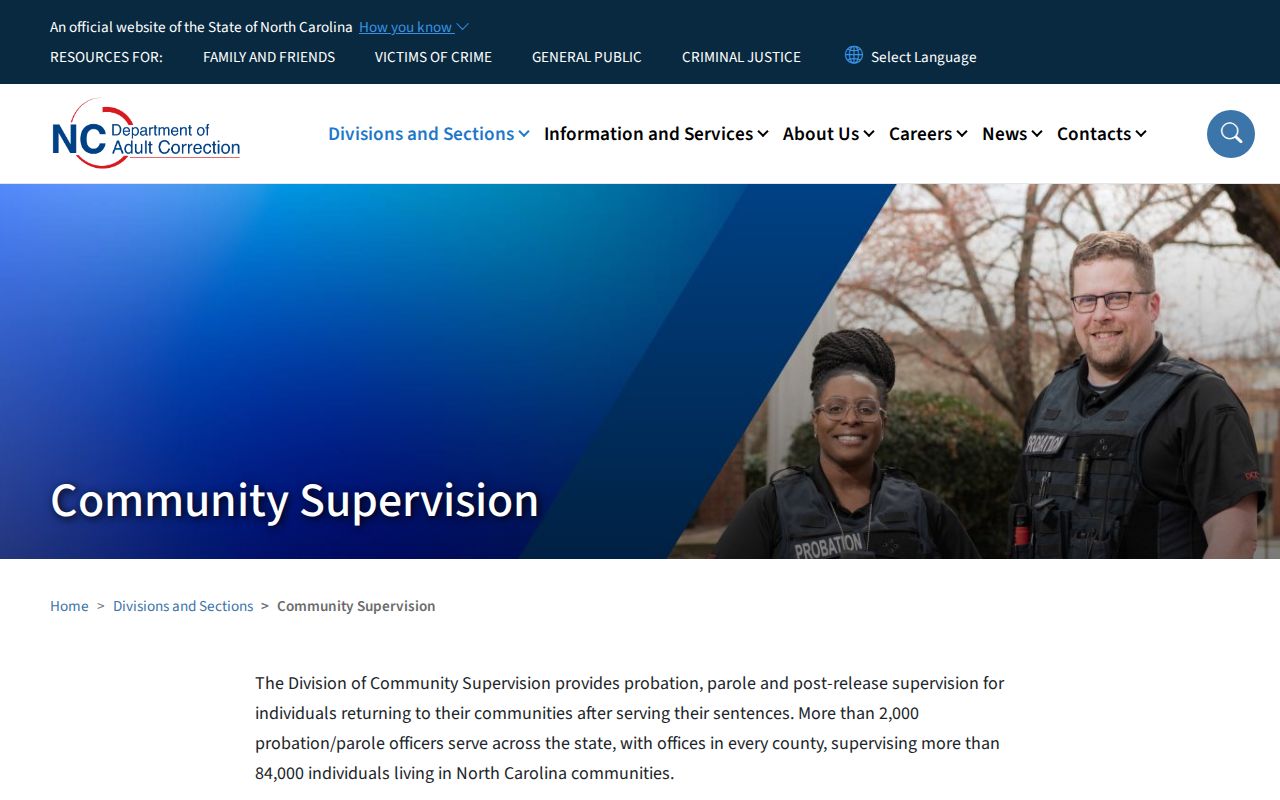
The source confirms that a public record may describe community supervision even after confinement has ended, so release and discharge must be checked separately.
Chatham County Judicial District 14 Supervision
Chatham County is in Community Supervision Judicial Division 2, Judicial District 14, with Durham and Orange counties. The state says probation offices exist in every county, but the reviewed statewide field roster did not publish a person-level Chatham reporting address. The published district management office is in Durham. It is a routing and management contact, not proof that every Chatham supervisee reports at that suite.
District 14 Management Office
3325 Chapel Hill Boulevard, Suite 230-A
Durham, NC 27707
919-560-5423
Fax: 919-560-5860
Community Supervision Central Office
2020 Yonkers Road, MSC 4250
Raleigh, NC 27699-4250
919-716-3100
Use the office shown on the current NCDAC record when one appears. If it differs from the district management contact, the individual record is the better routing clue. For a court-imposed probation question, the Chatham County courts page leads to the Clerk at the Justice Center, which maintains the official judgment.
North Carolina Parole Reviews for Chatham County
The North Carolina Post-Release Supervision and Parole Commission handles parole decisions and sets PRS conditions. Ordinary North Carolina parole review does not use conventional public hearings or personal meetings with the person under review. Commissioners review the file and vote independently, and a majority is required. There is no normal future hearing calendar or hearing-date lookup to search.
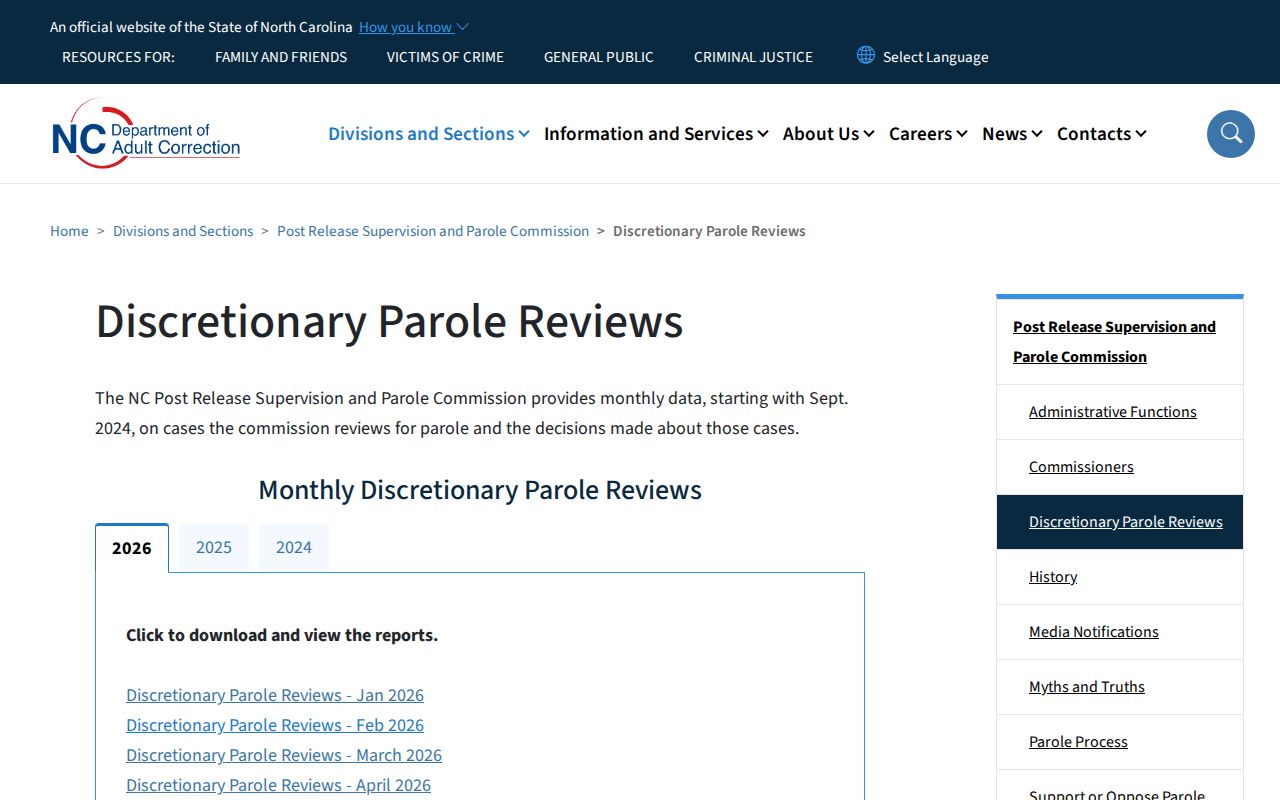
Since September 2024, the Commission has posted monthly Discretionary Parole Review spreadsheets. These are retrospective result reports, not a coming schedule. Their result terms include Incomplete Decision, Suspend Decision, Regular Parole, Community Service Parole, Early Medical Release, 90-day Mandatory Parole, and Denial. The underlying file and denial reasons remain confidential, and the Commission says its parole decision has no appeal.
The official monthly-review source is shown below. Its month-by-month results can help identify a decision, but a current NCDAC record is still needed to learn whether supervision is active now.
Most people sentenced for offenses committed under structured sentencing are not in this traditional parole group. Ordinary parole generally remains tied to pre-October 1994 offenses, with a narrow later category for juveniles sentenced to life with the possibility of parole. PRS is mandatory supervision under a separate framework and should not be mistaken for a parole-board grant.
Note: A monthly parole result shows a past decision category, while the current offender record shows whether supervision is active at the time checked.
Chatham County Absconder Records Need Fresh Checks
NCDAC defines an absconder as a supervisee who failed to keep contact with a probation or parole officer and actively made their whereabouts unknown. North Carolina provides a statewide absconder page, not a Chatham County-only supervision-warrant list. The public route also accepts anonymous tips at 888-646-0024.
The state warns that removal can lag by days or weeks. A listed person might already be held elsewhere, outside the country, or deceased. For that reason, an entry is not proof that the person is currently at large in Chatham County. Compare the list with the fresh individual NCDAC record and, when needed, the agency contact. Do not turn a statewide entry into a local status claim without that check.
Conditions and alleged violations also require restraint. The public record may show a supervision state, but it does not expose every condition, alleged breach, confidential note, or warrant detail. A custody-change alert from NC SAVAN can be useful, yet an alert does not replace the agency record or court order.
When Chatham County Supervision Ends
Release from prison is one endpoint; discharge is another. Under G.S. 15A-1368.2(f), completion of the PRS period terminates the sentence governed by that provision. Until then, a record can properly show the person outside prison while still active under NCDAC control.
To document the end of supervision, capture the current status fields and identify the matching supervision and sentence blocks. Then compare the official judgment, NCDAC incarceration and supervision history, and any agency discharge record. North Carolina does not publish one universal sentence-completion certificate search. An inactive label needs the same careful reading as an active one because it can refer to a particular period rather than every case.
The Public Records Act permits access to public material, but corrections, sealed, expunged, victim, medical, juvenile, and law-enforcement exceptions can limit disclosure. A request should seek an existing admission, release, supervision, or discharge record by offender number and date range. North Carolina law does not require an agency to create a custom report that it does not maintain.
Reentry After Release in Chatham County
The Chatham County Local Reentry Council serves people returning from a local jail, state prison, or federal prison. Its help may begin before release or after return. Purpose-neutral services include case management, immediate-needs planning, transportation support, community-resource navigation, and connection to substance-use treatment.
The council is not NCDAC Community Supervision, the Parole Commission, the Sheriff, or a court. It does not decide release, set probation terms, issue parole results, verify an absconder entry, or establish discharge. Keeping those roles separate prevents a support referral from being mistaken for an official status finding.
Chatham County Reentry Program
Chatham County Justice Center
40 East Chatham Street, Suite 1500, Pittsboro
Kimberly Jones: 919-545-1990
A person can receive voluntary reentry help while also reporting under probation, parole, or PRS. The reentry program addresses practical return needs; the NCDAC record and assigned supervision office remain the official sources for correctional status.